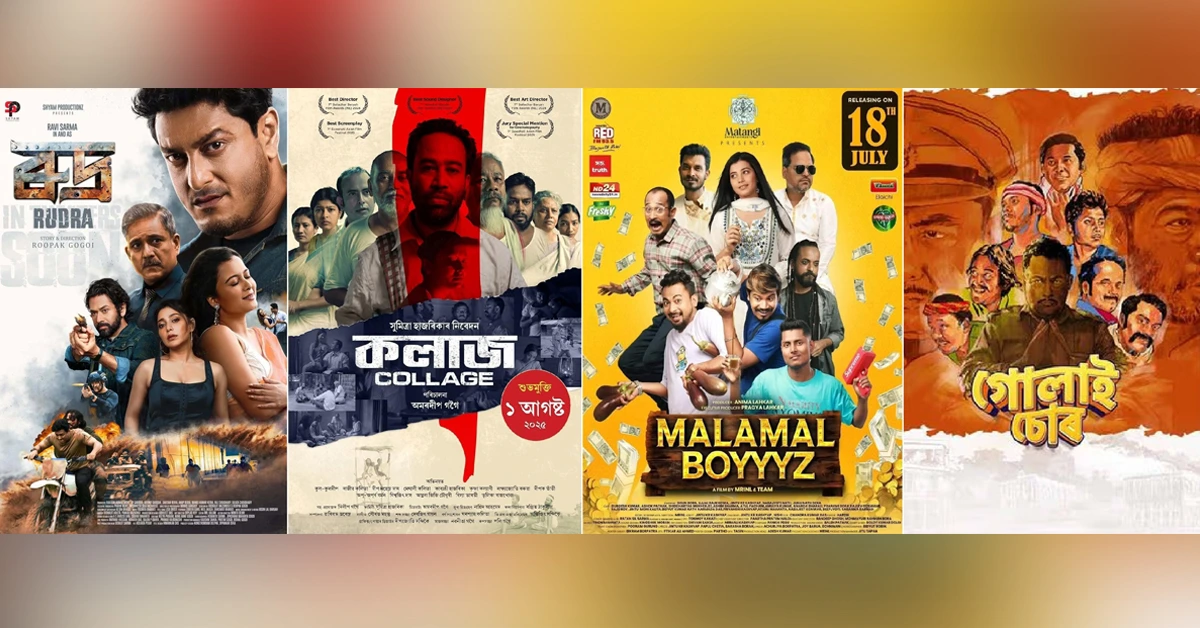
Premier show reviews, however, shouldn't be taken too seriously. Many of these audiences are superficial, lack exposure to the latest films, and, most importantly, never buy a ticket to watch an Assamese film from their own pocket. Such a crowd gets invited to premieres, watches the film, clicks photos, and floods social media with exaggerated praise for it. This kind of feedback can be misleading
In recent years, Assamese cinema has witnessed a new wave of fresh voices and promising young filmmakers, such as Mrinmoy Saikia, Mrinal Deka, Dhanjit Das, and Chinmoy Sharma, who have successfully carved out a niche for themselves while forging meaningful connections with their audiences.
Their works have collectively demonstrated massive creativity, energy and a clear desire to push the industry forward. However, a recurring flaw has started to surface. It is a flaw that has become particularly evident when these filmmakers transition from small, focused projects to larger, more ambitious narratives.
There is a noticeable pattern. When working with limited budgets and tightly focused narratives, these filmmakers often deliver compelling and well-crafted films. The storytelling feels controlled, and the characters are grounded, and the emotional payoff is satisfying. Take Kolongpar (2021) web-series or Xobdo Nixobdo Kolahol (2022), for example.
But when the scale expands, and multiple characters, broader plot points and higher production values float in—the storytelling often crashes down from the air. This happens especially towards the climax of their movies.
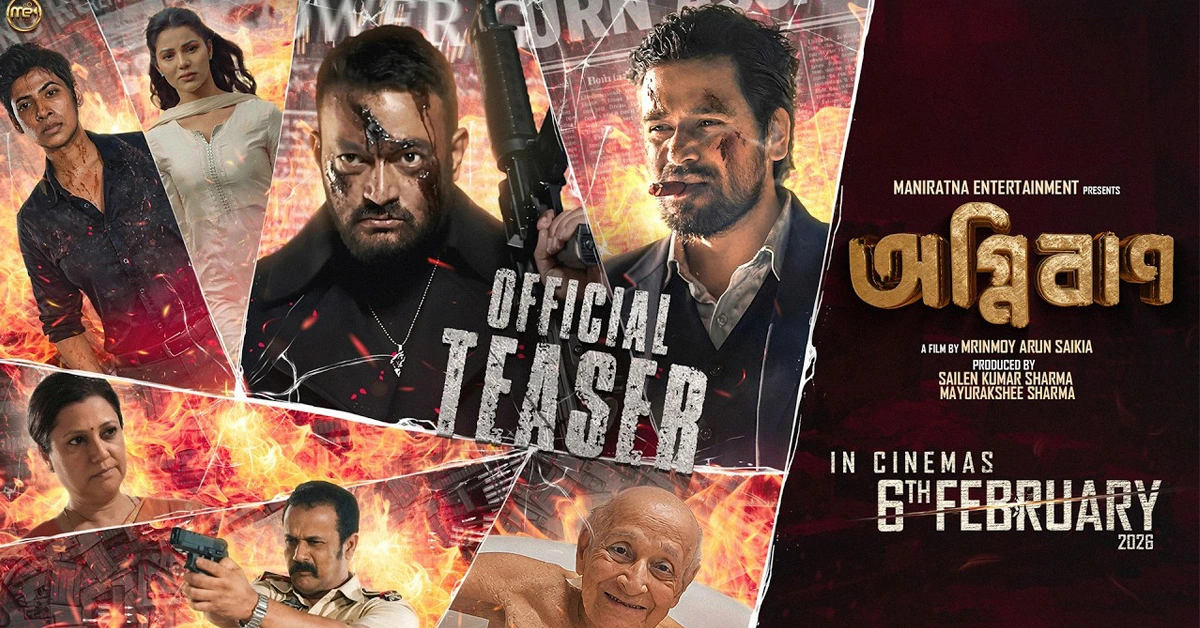
Films like Casetu Nagen (2025), Malamal Boyyyz (2025), Agnibaan (2026), and Bhakut Kut (2026) all start with promise. They build interesting setups, introduce diverse characters and create expectations of a satisfying payoff.
But as the films approach their conclusions, the narrative control weakens. As a result, the endings often feel rushed, disconnected, or simply underwhelming.
It leaves the audience with the impression that the story was concluded out of necessity rather than intention.
The root of this issue lies in the script. Often, multiple writers are involved in the scripting, or the screenwriter is simply preparing a film for release within a year. Sometimes writers and filmmakers do not watch enough films on the same subject they are making a film about.
Writers like Abhijit Bhattacharya are often criticised for lifting stories, sequences or plot points from Hindi and South Indian films.
However, it should be acknowledged that at least they watch these films, which helps them understand how to execute a story effectively. As a result, the emotional beats in his scripts—despite being inspired or adapted from other films—often land with considerable impact.
Therefore, a strong beginning is not enough. A film must resolve its arcs in a way that feels earned. Loose ends should not be abandoned; they should be tied together in a meaningful and impactful way.
Most importantly, the ending should resonate with the audience because that is the feeling they will take back with them.
Another common issue is the inclusion of characters who serve little to no purpose in the story. For instance, characters like Pranjal Saikia in Bhakut Kut (2026) and Preety Kongana in Agnibaan (2026). They exist simply because they have to.
Sometimes such characters are given more screen time and even backstories, but all of this comes across as meaningless because it contributes only minimally to the plot's progression.
Every character in a film should have a function—whether it's driving the story forward, deepening the theme or influencing the protagonist.
If a character can be removed without affecting the narrative, they likely shouldn’t be there in the first place. Also, the filmmakers have to be cautious about how they are portraying their female characters – do they exist only to fulfil the role of a love interest? Do they have enough agency in relation to other male characters of the film?
The writers of Agnibaan, to avoid this predicament, adjusted their female character with a feminist voice and agency, but she was just slapping people around and delivering moral sermons about female empowerment. So, an important factor is also avoiding cringe.
Then comes the twists. The twists and turns in the script must be used very carefully as well. Saving them for the right moment can elevate a story, but unnecessary complications in the name of parallel storytelling or non-linear storytelling can only dilute the narrative. That's because tackling parallel and non-linear storytelling requires a strong command of screenplay writing—something many recent Assamese filmmakers seem to lack.
The secret to mastering these scripts is to study screenplays that use these techniques well. It is disappointing that many writers skip this homework. Instinct alone can only carry a film part of the way.
Pacing is another area where many of the recent films have struggled. There is a tendency to stretch scenes beyond necessity, leading to bloated runtimes. This was the case with Agnibaan (2026).
A story that could be told effectively in 90 minutes is often extended to nearly 3 hours. Again, Malamal Boyyyz (2025) is a clear example, where multiple scenes could have been combined or trimmed without losing any narrative value.
Assamese filmmakers need to embrace efficiency over excess. When faced with two ways to tell a story, the leaner, punchier route nearly always wins.
Another pitfall is chaos. Films like Casetu Nagen (2025) and Malamal Boyyyz (2025) spiral into disorder by the end, but the mess feels forced, not funny. It is doubly frustrating because this brand of comedy was nailed years ago in early 2000s Hindi hits like Hera Pheri and Hungama.
Assamese filmmakers are late to the party, and they miss the timing, structure, and charm that made those classics shine.
In the pursuit of entertainment, especially comedy, some films also tend to go overboard. Therefore, attempting to replicate the style of masters like Priyadarshan can be tempting, but it often leads to exaggerated, unfocused storytelling.
What made the storytelling of filmmakers like Priyadarshan or Anees Bazmee successful is not just humour but their command over structure, timing and character dynamics—something that takes years of experience to master. Without that control, comedy can quickly turn into chaos.
Another concern is the lack of originality in certain narratives. Some films end up recycling ideas or solutions that audiences have already seen before. For example, Malamal Boyyyz (2025) presents a resolution that closely resembles one used in Priyaar Priyo (2017). Audiences today are more exposed than ever—they watch regional, national and international cinema. Repetition is easily noticed and weakens a film's impact.
Filmmakers should also actively read published reviews and criticisms of their films. These are easily available on platforms like Facebook, Instagram, Google, IMDb, and even Reddit. Ignoring them comes across as dismissive.
Instead, respect these voices and try to engage with them meaningfully.
Premier show reviews, however, shouldn't be taken too seriously. Many of these audiences are superficial, lack exposure to the latest films, and, most importantly, never buy a ticket to watch an Assamese film from their own pocket.
Such a crowd gets invited to premieres, watches the film, clicks photos, and floods social media with exaggerated praise for it. This kind of feedback can be misleading.
What truly matters are honest responses from real audiences and critics. Pay attention to both praise and criticism—not just of your own film, but of others as well. Understanding why a film succeeds or fails is essential for growth and better storytelling.
While discussions often focus on new filmmakers, a similar issue applies to some older, established directors as well. Many of them won national awards decades ago—at a time when competition was far more limited. Today, however, some of these filmmakers seem to be relying on past recognition rather than current merit.
Instead of evolving with changing audiences and cinematic standards, they continue to make films that feel outdated and lack quality. This not only disappoints viewers but also wastes valuable resources, especially when producers continue to invest in their projects based on past reputations.
Filmmakers such as Hiren Bora, Chandra Mudoi and Hem Chandra Borah are often cited in this context. Many critics and audiences feel that their recent work does not match the standards they once set.
There comes a time to recognise when creative momentum has waned. Instead of churning out lacklustre films, it might be wiser for these filmmakers to step aside and make room for fresh voices and new perspectives.
In 2026, Assamese cinema is at an exciting crossroads. The talent is evident, and the ambition is commendable. But ambition must be supported by strong storytelling fundamentals. Without control over narrative, structure and pacing, even the most promising films risk falling apart by the end.
Today, the study of the challenges of Assamese cinema should go beyond structural issues such as the limited number of cinema halls, the lack of producers, tight budgets, and weak marketing or publicity.
Those are real concerns, but they’re only part of the problem. Now, it’s equally important to examine the narratives and stylistic choices of the films themselves.
Without stronger storytelling, fresh ideas and more thoughtful execution, improvements in infrastructure alone won’t be enough to push the industry forward.
Therefore, for new and upcoming filmmakers, the lesson is clear. Perfect the script before moving to production, avoid unnecessary characters and keep the runtime crisp and engaging.
Do not bore audiences, and the most important of all, watch a wide range of films—good and bad—to understand what works and why it works.
Focus on originality rather than imitation and ensure the ending is impactful. Success, especially early success, should not lead to overconfidence. It should encourage exploration, humility and growth.
The future of Assamese cinema will be shaped not by bigger budgets, but by stronger stories and sharper execution. Reading this article is just the start—share it with friends, spark discussions, and let these ideas ripple through your circles. Real change begins with conversation.
ALSO READ | Reasons To Watch Kahinir Aror Kahini: First Assamese Found Footage Film

Gyanam Kalita is a dedicated writer and an avid reader with a keen interest in art, literature, and cinema, particularly Assamese and regional films. He is known for his thoughtful perspectives and well-informed opinions on these subjects.