Partha Prawal Goswami has produced a work that does not seek to impress through scale or spectacle. Instead, it invites the readers into an intimate psychological space and leaves them there, uncertain yet contemplative
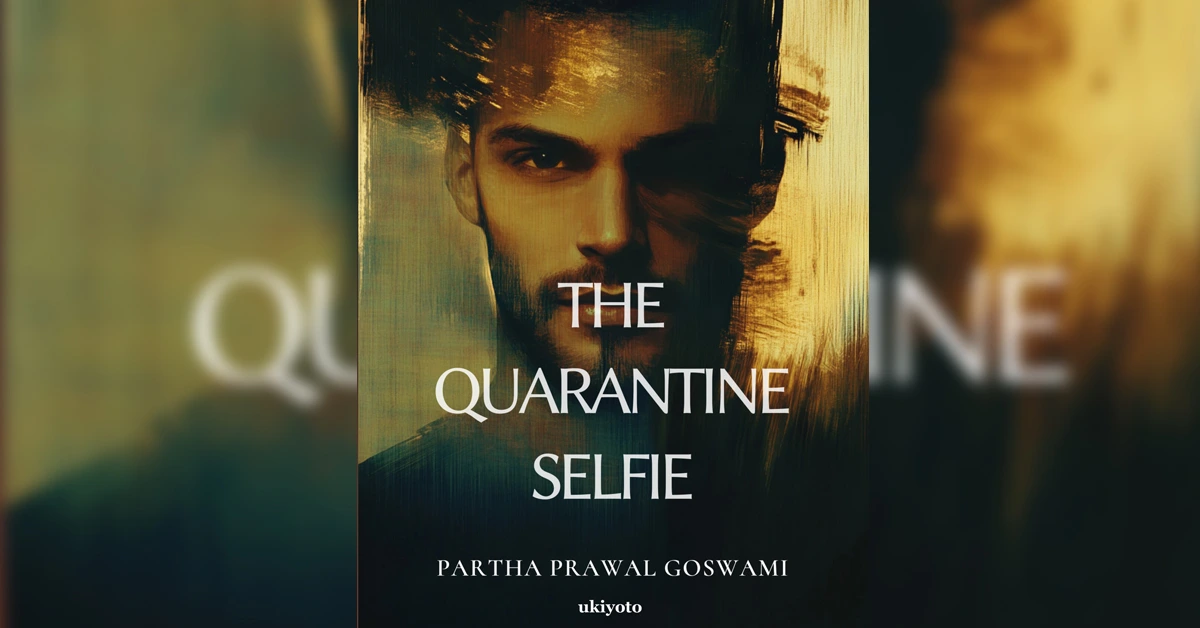
Partha Prawal Goswami’s The Quarantine Selfie is a slim yet psychologically resonant novelette that examines contemporary loneliness through the lens of digital intimacy.
Though modest in length, the work carries a density of mood and feeling that far exceeds its physical size.
It is the kind of book that can be read in a single sitting but cannot be so easily set aside afterwards.
At its surface, the narrative inhabits a recognisable present — one shaped by screens, messaging platforms, and relationships sustained almost entirely through text and images.
The author demonstrates a keen ear for the rhythms of online communication: the rapid exchanges, the pauses that carry as much meaning as the words themselves, the casual humour that masks vulnerability, and the peculiar intimacy that develops between people who have never occupied the same physical space.
These interactions feel lived-in rather than constructed, suggesting careful observation of contemporary social behaviour.
The prose is deliberately unadorned as the author avoids stylistic flourish, choosing instead a plainspoken narrative voice that prioritises clarity over ornament. This restraint proves effective.
By refusing to sensationalise either emotion or circumstance, the text achieves a quiet credibility. The readers are not guided toward predetermined reactions; rather, the emotional atmosphere accumulates gradually, almost imperceptibly.
What emerges is less a sequence of dramatic events than a sustained exploration of psychological states — longing, uncertainty, dependence, and the fragile reassurance that connection, however mediated, can provide.
A notable strength of the novelette lies in its treatment of absence and ambiguity. Much of the tension arises not from overt conflict but from what remains unsaid or unresolved.
The author resists the contemporary tendency toward narrative closure. Instead, the work leaves interpretive space for the reader, allowing multiple readings to coexist. This openness lends the text a haunting afterlife, as one continues to reconsider earlier moments in light of later developments.
Equally compelling is the work’s evocation of isolation in a hyperconnected age. The paradox at the heart of the book — that constant communication can coexist with profound solitude — is rendered with subtlety.
Digital interaction here is neither romanticised nor condemned; it is portrayed as both lifeline and illusion, capable of sustaining emotional survival while simultaneously destabilising one’s sense of reality.
In this respect, the novelette captures something essential about early twenty-first-century relationships: their immediacy, their intensity, and their inherent precariousness.
The setting, rooted in an identifiable urban Assamese milieu, adds further texture without becoming overly regionalised.
Cultural references emerge organically, grounding the narrative in a specific social landscape while remaining accessible to readers beyond it.
The author's familiarity with this environment is evident, yet he refrains from turning it into spectacle or nostalgia. Instead, place functions as emotional backdrop rather than thematic centre.
If the work has a limitation, it lies in occasional expansiveness where concision might have sharpened the effect. Certain passages linger slightly longer than necessary, particularly in descriptive or conversational stretches.
However, given the introspective nature of the narrative, this diffuseness can also be read as stylistic — mirroring the repetitive, looping quality of memory and rumination.
Ultimately, The Quarantine Selfie is less concerned with telling a story in the conventional sense than with examining how stories are constructed in the mind, especially when memory, perception, and mediated experience intersect.
It belongs to a growing body of contemporary literature that grapples with the psychological consequences of living online, yet it distinguishes itself through tonal restraint and emotional authenticity.
What lingers after the final page is not a single image or revelation but a mood — subdued, uneasy, and quietly mournful.
Partha Prawal Goswami has produced a work that does not seek to impress through scale or spectacle. Instead, it invites the readers into an intimate psychological space and leaves them there, uncertain yet contemplative.
In an era saturated with loud narratives and rapid consumption, The Quarantine Selfie stands out for its quietness. It is a work that trusts the reader’s patience and interpretive intelligence, offering no easy catharsis but a lingering sense of human vulnerability in a world where connection is abundant and certainty increasingly rare.
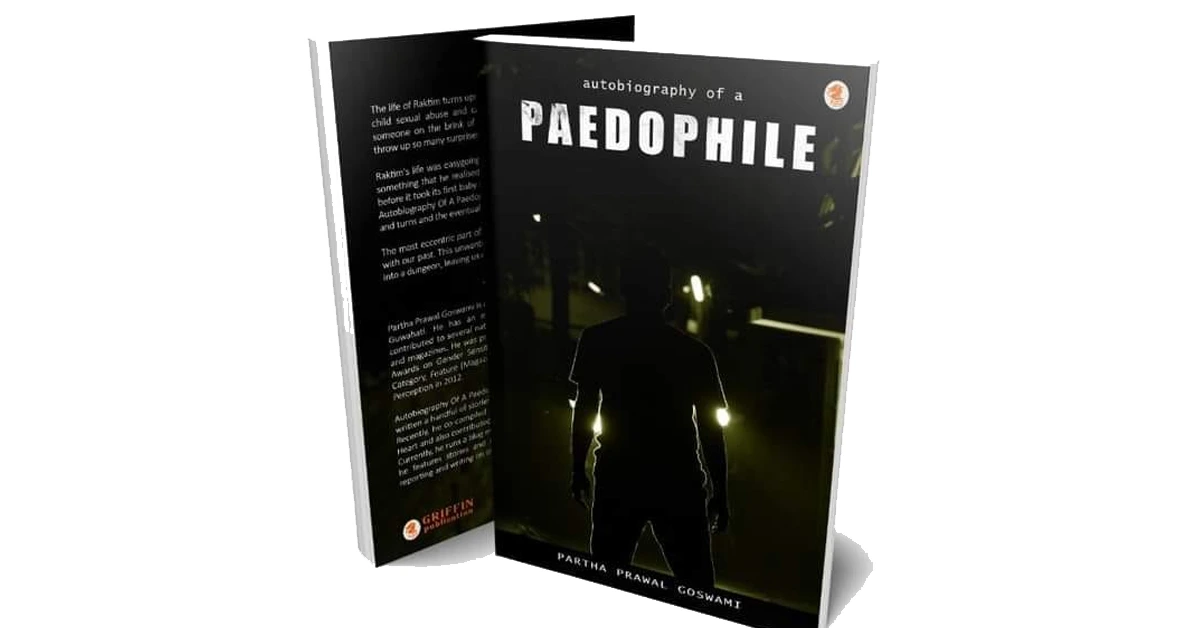
ALSO READ | Autobiography Of A Paedophile And My Journey

Monaliza Goswami is a freelance writer based in Guwahati, who loves watching movies and writing about the, apart from travelling and writing on other topics like investment, social issues and others.