
IN-CONVERSATION
From Calendar To Moromor Deuta: Himjyoti Talukdar Reflects On Assamese Cinema And Family Narratives
With films such as Calendar, Taarikh, and now Moromor Deuta, Himjyoti Talukdar has quietly carved a niche for himself in Assamese cinema as a filmmaker drawn to humane, emotionally grounded storytelling.
His cinema often explores ordinary lives, fractured relationships and moral dilemmas with sincerity and restraint, avoiding easy sentimentality while remaining deeply empathetic towards its characters.
At a time when regional independent cinema is increasingly negotiating the pull of wider visibility and mainstream acceptance, Talukdar’s work stands out for retaining its rootedness and integrity.
In this conversation, the filmmaker reflects on his creative journey, recurring themes of fatherhood and family, and the making of Moromor Deuta.
Dipankar Sarkar: Moromor Deuta is a project you have wanted to make for a long time. What delayed the journey from conception to completion?
Himjyoti Talukdar: The film’s journey was delayed largely due to the COVID-19 outbreak. We began working on the script in 2018, soon after the release of my first film, Calendar. After spending nearly two years developing the screenplay, we planned to begin shooting in 2020. But the pandemic struck, and our plans had to be postponed. We tried again in 2021, but the second wave forced us to stop once more.
The interruptions had a significant financial impact, so we put the project on hold for a while. Finally, in 2024, with the support of our producer, Mamata Mahilary, we resumed shooting and eventually brought the film to theatres in 2026.
Dipankar Sarkar: How did producer Mamata Mahilary contribute to shaping and supporting the film, particularly given the challenges of independent regional filmmaking?
Himjyoti Talukdar: In the middle of all the uncertainty and challenges that come with independent regional filmmaking, producer Mamata Mahilary played a very important role in shaping and supporting the film.
At a time when we were struggling to move the project forward, especially after the pandemic-related setbacks, her faith in the story gave us renewed confidence. She believed in the story, its cultural value, and the sincerity behind the filmmaking process.
Her willingness to come forward and support the project at such a difficult phase helped us restart the production after a long pause.
Dipankar Sarkar: From Calendar to Taarikh, and now Moromor Deuta, the figure of the father occupies a central emotional space in your films. What draws you repeatedly towards exploring fatherhood and familial responsibility?
Himjyoti Talukdar: I never consciously planned to make films around fatherhood, but somehow these relationships keep finding their way into my stories. I think it comes from observing people closely and seeing how deeply family shapes our emotions, decisions, and even our silence.
In our society, especially in Assamese middle-class families, fathers are often not very expressive, yet their presence carries a strong emotional weight. Often, love, sacrifice, regret, and expectations remain unspoken within a family, and I feel cinema can explore those quiet emotions honestly.
In Calendar, Taarikh, and Moromor Deuta, the father figure becomes important not only as a symbol of authority but as a human being with vulnerabilities, mistakes, fears, and love.
I feel audiences connect strongly with emotions rooted in family because they are both universal and personal.
Dipankar Sarkar: Your films often work within modest budgets, limited locations and intimate domestic settings, while engaging with themes of family, sacrifice and moral conflict. Do you see this as a conscious aesthetic and narrative approach?
Himjyoti Talukdar: Yes, to a large extent, it is a conscious approach, though it has also grown naturally from the kind of stories I feel emotionally connected to.
I have always been more interested in human relationships, silence, emotional tension, and everyday realities rather than spectacle. Intimate domestic spaces allow me to observe characters very closely and explore their inner conflicts in a more honest and grounded way.
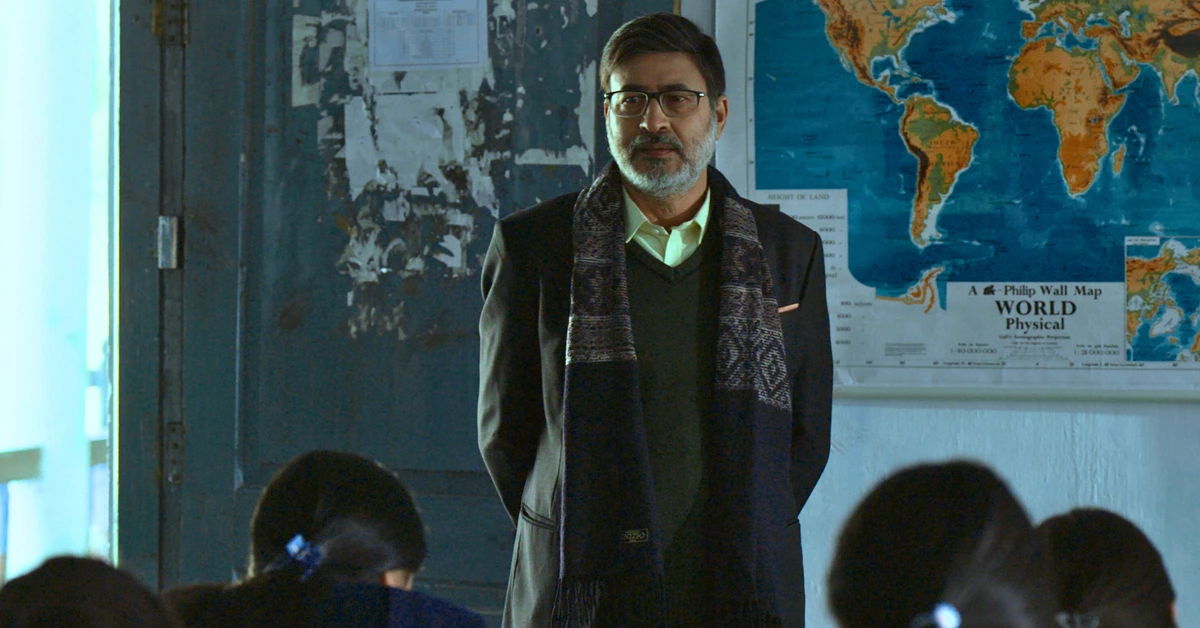
A Still from Moromor Deuta | On Screen Is Mintu Baruah
Working within modest budgets teaches you to focus on what is truly essential in storytelling. Instead of depending on scale, I try to build emotional depth through performances, atmosphere, and the small details of everyday life.
At the same time, limitations themselves sometimes shape a film’s aesthetic. When resources are limited, you become more careful with framing, writing, and the emotional rhythm of scenes. Over time, that process has become part of my cinematic language. I do not see simplicity as a weakness; in fact, I feel that restrained storytelling can often create a stronger emotional connection with the audience.
Dipankar Sarkar: This marks your third collaboration with editor Uddipta Kumar Bhattacharyya. How has your creative partnership evolved over the years, and what does he bring to your projects specifically?
Himjyoti Talukdar: Working with Uddipta Kumar Bhattacharyya on multiple films has created a strong creative understanding between us. Since Taarikh (2024) and, later, my short film Ilish (2025), we have gradually developed a rhythm where communication during the editing process has become much more instinctive.
We discuss, work on the edit, pause for a while, then return to discuss it again, and this process keeps repeating. Sometimes it takes months before we finally arrive at the final structure of the film. What I value most about him is his patience and sensitivity.
In my films, small expressions, pauses, and emotional transitions are very important, and he handles those moments with great care. He often brings fresh perspectives to scenes, suggests structural changes, or finds emotional continuity that may not have been obvious during shooting.
Dipankar Sarkar: Alongside filmmaking, you also run the platform Trending Now Media. Tell us about it?
Himjyoti Talukdar: Under the banner of Trending Now Media, we create feature films, documentaries, and short films. It is a film production house through which all our creative audiovisual works are produced and developed.
Our primary focus is on regional, small-scale budget productions that strongly emphasise storytelling and human emotions. Rather than relying on scale, we aim to create meaningful, sincere cinema rooted in strong narratives.
At the same time, one of our major goals is to provide a platform for young and talented artists, actors, and crew members to explore and showcase their abilities. Almost all of our productions have featured emerging talent, both in front of and behind the camera, and we believe that supporting new voices is essential to the growth of regional cinema.
Dipankar Sarkar: After Moromor Deuta, what kinds of stories or projects are you hoping to explore next?
Himjyoti Talukdar: Currently, I am focusing more on writing and developing new projects. One of the films I am planning is a sequel to my first film, Calendar (2018), which will also complete the time trilogy after Calendar and Taarikh. I want to revisit that world with a completely new emotional and narrative turn.
The draft screenplay has already been completed, and I am now working further on its development. If everything goes according to plan, I hope to complete the film by 2028, exactly ten years after the release of Calendar in 2018.
ALSO READ | In Conversation With Award-Winning Assamese Filmmaker Smriti Prakash Baruah

Dipankar Sarkar is a film critic who contributes to different publications- both national and international. He is a Research Fellowship from the NFAI, Pune, India, and was one of the panelists for the selection of world cinema at the 27th International Film Festival of Kerala in 2022.
The New Packaging Of The Same Old Gaze
June 25, 2026
Rahim Raj: He Is Not Just A Singer, But An Emotion.
June 14, 2026