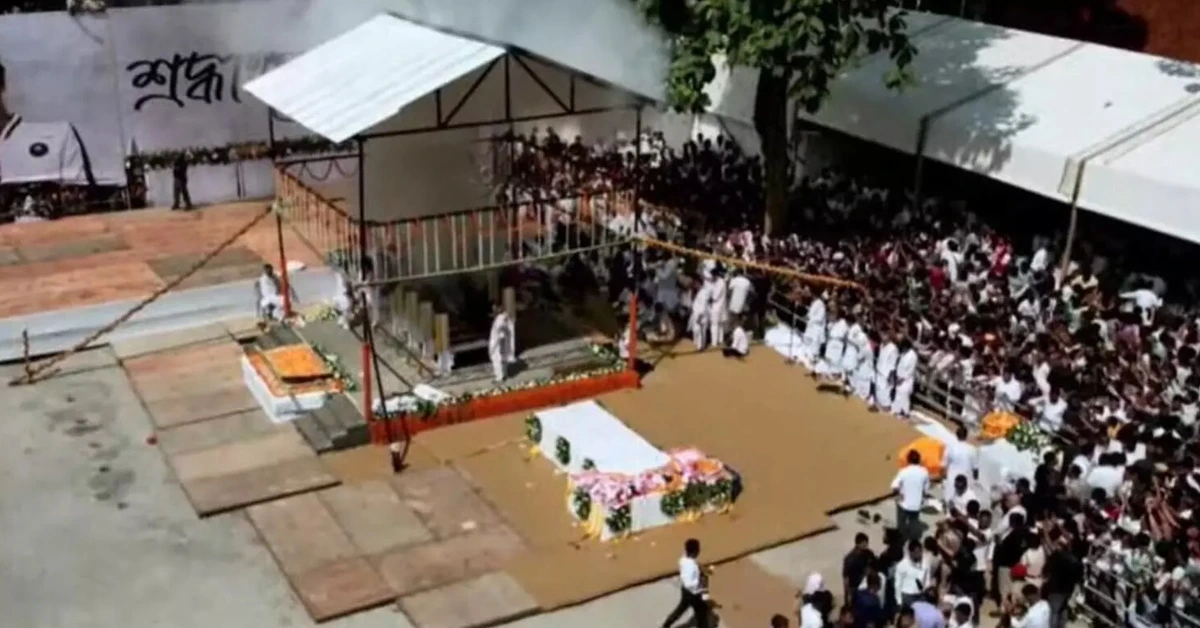
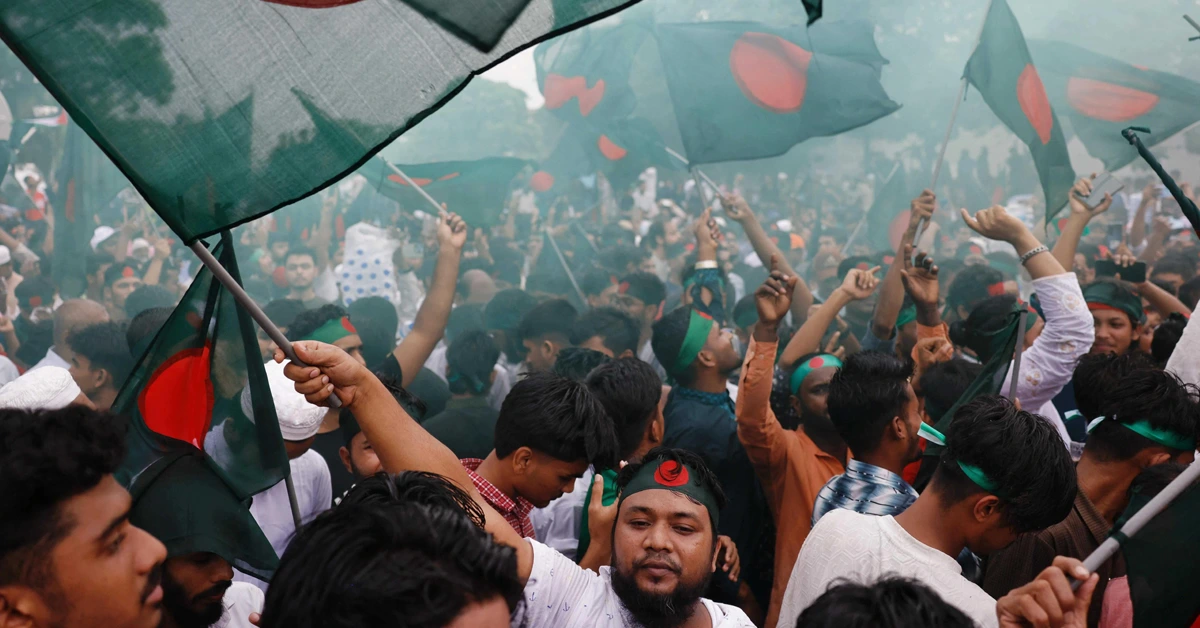
Amid anti-India rhetoric, Bangladesh recently witnessed turmoil following the demise of a young radical leader, Sharif Osman Bin Hadi, and is now gradually returning to normalcy as the South Asian nation prepares for its next general election scheduled for February 12, 2026.
The highly sought-after polls, held after the sitting Prime Minister Sheikh Hasina faced an overthrow in the backdrop of a student-led mass uprising in July–August 2024, however, miss the participation of Hasina’s party, the Awami League, which had ruled the Muslim-majority country of 170 million people for several years.
The ousted premier, along with thousands of her party members, continues to stay in neighbouring India even after she was handed a death sentence by a Bangladeshi court for crimes against humanity during last year’s rebellion that resulted in the deaths of over 1,400 individuals, including minors.
Ignoring repeated official communiqués from the current interim regime led by Nobel laureate Dr Muhammad Yunus in Dhaka, India remains non-committal over her repatriation. This has caused a strain on diplomatic relations between Dhaka and New Delhi, and of late, Bangladesh’s bilateral ties with the billion-plus nation have only worsened.
Many anti-Hasina campaigners have rumoured that Hadi’s killers entered Indian territory soon after the shooting attack in Dhaka on December 12, 2025, after which the Inqilab Mancha leader was flown to Singapore for advanced treatment, but he succumbed to his injuries on the evening of December 18, 2025.
The prime accused, Faisal Karim Masud, who was associated with the Chhatra League, the student wing of the Awami League, continues to remain untraceable, and a large section of Bangladeshi nationals believe, without justification, that he was receiving support and hospitality from New Delhi. As a result, the fury was directed against India, and motivated elements stepped up activities targeting Hindu families in different parts of Bangladesh.
Meanwhile, the horrific killing of Deepu Chandra Das, 27, a garment worker in Bhaluka in the Mymensingh region, by an angry mob over an unconfirmed allegation of making derogatory remarks against Islam on December 18, 2025, and that of Uttam Kumar Barman, 45, a grocery shop owner from the Rangpur region, killed on similar allegations of blasphemy on December 13, 2025, triggered massive protests in India.
Protesters demonstrated outside Bangladesh’s diplomatic missions demanding justice for the victims and security for non-Muslims in the country. The interim government firmly stated that the killing of the Mymensingh worker was a heinous criminal act with no justification.
Recently, education adviser Prof CR Abrar visited Deepu’s family to convey the government’s sympathy and assurance of support during this difficult time. He reaffirmed the authorities’ unwavering commitment to the rule of law and informed that over 10 people had been arrested in connection with the crime.
In a recent report, the Brussels-based International Crisis Group (ICG) pointed out that Hasina’s presence in India has been a major factor in the simmering tensions between the two neighbouring countries.
Almost immediately after taking office, the interim government began pushing for Hasina’s extradition under a 2013 treaty, but Indian officials were never likely to agree to send her back, the report added.
New Delhi, it said, did not want to “look like an unreliable ally to other governments in the region” by extraditing her and has therefore continued to support Hasina. Dr Yunus personally urged Prime Minister Modi to prevent the disgraced premier from making political statements while in India, warning that her interventions in Bangladeshi politics were being seen as an unfriendly gesture.
His remarks were not well received by New Delhi, and Bangladesh was further aggrieved over India allowing thousands of Awami League activists to undertake political activities from Kolkata and New Delhi, the conflict-prevention organisation stated.
Recently, Hasina made a critical comment on the current turmoil in Bangladesh, accusing the Yunus-led interim government of being a failed entity. She described the tragic killings as a reflection of lawlessness that has become the norm, where the interim government either denies the situation or remains powerless to address it.
Alleging that the current authorities had placed “extremists” in top positions, released convicted terrorists from prison and allowed international terrorists to play roles in public life, Hasina also blamed them for the strained relations with India.
Hasina has also rejected calls to return to Bangladesh “to face political assassination” until a legitimate government is installed in Dhaka that supports an independent judiciary. She did not fail to thank New Delhi for its continued hospitality since her departure from Dhaka last year.
India’s position on Hasina’s stay is clear and is guided by its civilisational ethos and humanitarian tradition of offering refuge to individuals facing circumstances of grave distress or existential threat. New Delhi had earlier sent a strong message demanding justice for Deepu, stating that India remains concerned over the deteriorating security situation in Bangladesh affecting religious minorities.
However, the question that arises is why Hasina should not tender an apology to the Sanatani Hindu community, as she too failed to protect Hindus and other minority families during her long tenure as Prime Minister of Bangladesh.
Initially, she was reported to be preparing to move to a third country, but to date none has offered asylum to her, nor has any openly appreciated New Delhi for rescuing Hasina from a possible death at Ganabhaban on August 5, 2024.
Hasina remains compelled to stay in a Hindu-majority country for over a year, as no nation across the world has come forward to support her in her time of distress. Should it not be her first priority to seek forgiveness from the Hindus in India?
ALSO READ | "If We Stop Sending Money, You'll Starve": The Economics Of Kabuki And Other Tall Tales
Nava Thakuria is a Guwahati based journalist and associated with various newspapers for over three decades. His focus areas remain socio-cultural developments in northeast India and the media's changing phases across the country.