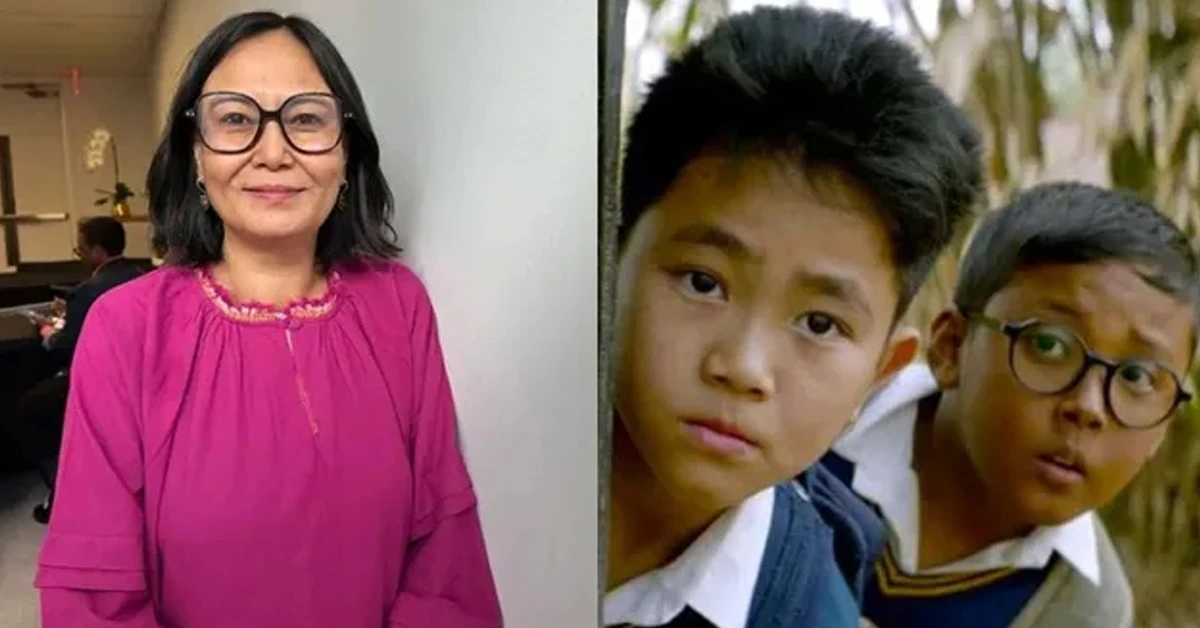
When Lakshmipriya Devi's debut feature Boong became the first Indian film to win the BAFTA Awards for Best Children’s & Family Film, the recognition felt less like an anomaly than a quiet correction.
The film resists the sentimental pull of coming-of-age stories and the reductive framing often imposed on narratives from India’s Northeast.
Set in Manipur, Boong unfolds in an intimate landscape that is also politically charged. Instead of using spectacle, it observes through the tentative, playful energies of childhood.
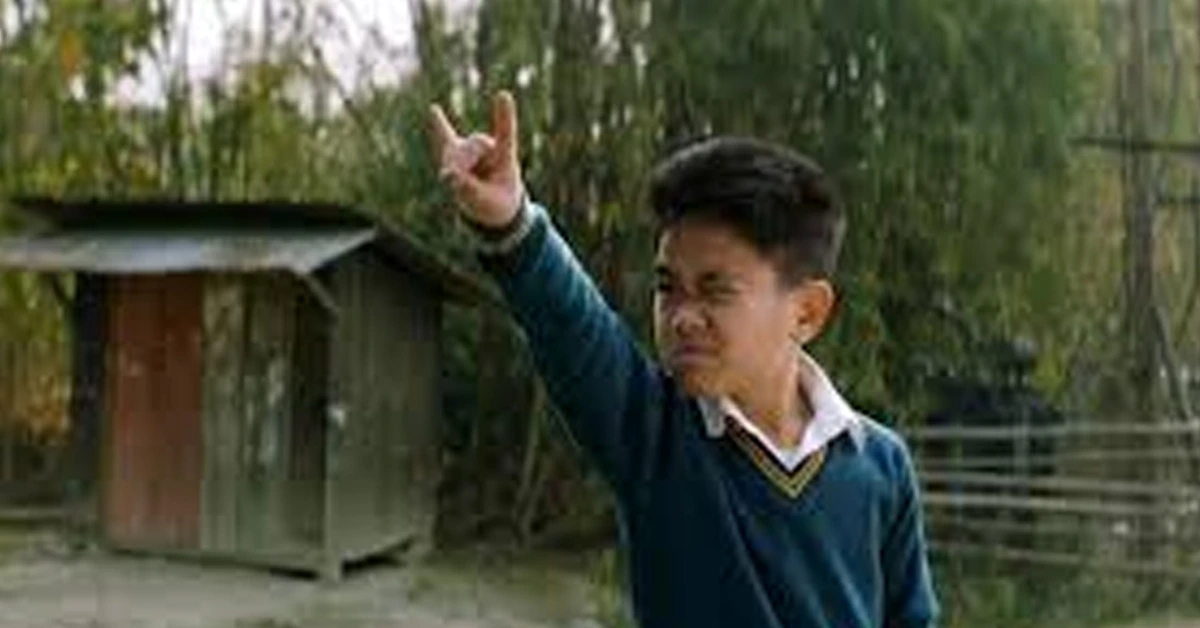
At its centre is Brojendro, or Boong (Gugun Kipgen). His quest to find his absent father gives the film a familiar narrative backbone. Yet, Devi is more focused on the social textures shaping the journey than on the answer itself.
The film opens with a minor act of sabotage: Boong engineers his expulsion from a vernacular school, hoping to get into an English-medium one. The gesture is impulsive and comic, but it carries the weight of aspiration.
English is not merely a language here; it marks mobility and aligns Boong with an imagined elsewhere, often shown as Delhi. By observing such details, Boong presents the quiet negotiations of class and desire rarely seen in mainstream Indian cinema.
The film stands out for quietly absorbing geopolitical realities. As Boong and his friend Raju (Angom Sanamatum) travel toward Moreh, near the India–Myanmar border, the film notes surveillance, regulation, and latent violence with offhand precision.
Checkpoints, warnings of insurgent activity, and the uneasy authority of the military appear as regular conditions of life, not plot points.
Devi’s approach is neither evasive nor declarative. She allows these forces to remain partially hidden, noticed in fragments as a child might perceive them.
The relationship between Boong and Raju adds complexity. Raju’s family traces its origins to Rajasthan, which leaves him unsure of his place in the local community. Their friendship includes teasing, and Boong’s use of “outsider” feels playful. Yet, the film slowly uncovers the historical unease behind such language.
This tension appears with Sudhir (Vikram Kochhar), Raju’s father, whose civic efforts are quietly limited by reminders of his outsider status. In Boong, belonging is never stable. It is always negotiated, contested, and occasionally withdrawn.
The film resists easy sociological readings and avoids emotional excess. Mandakini (Bala Hijam), Boong’s mother, is written with restraint that feels almost classical. As a single parent facing economic precarity and social judgment, she is neither idealised nor portrayed only as a victim.
Her resilience shows in her actions, not declarations—in her patience with Boong’s defiance, in her refusal to give up hope, and in her quiet dignity amid uncertainty. The film trusts viewers to recognise her strength without obvious cinematic cues.
Devi’s control extends to the film’s cultural language. Local rituals, community gatherings, and even the unexpected intrusion of 'Like a Virgin' are not used as mere ethnographic colour. Instead, they are part of the world’s lived details.
The film does not exoticise or explain; it simply observes and lets diverse influences coexist equally. This refusal to force meaning gives Boong its unique balance.
The child’s perspective does not simplify reality. Instead, it refracts it, revealing moral ambiguities and political undertones with clarity.
The journey remains unresolved in the usual sense. What endures is a deeper awareness of the world’s complexity—glimpsed, but never fully understood.
To call Boong a landmark may risk exaggeration. Still, the film signals a shift. It points to regional filmmaking that is neither insular nor eager to explain itself to outsiders. Instead, it trusts the specificity of its setting and the intelligence of its perspective.
By doing so, it quietly redefines the Indian coming-of-age film. Here, the story is attentive to the passage of time and to the social, political, and emotional structures that shape it.
ALSO READ | Why We Must Talk About Pradip Kurbah’s 'The Elysian Field'

Dipankar Sarkar is a film critic who contributes to different publications- both national and international. He is a Research Fellowship from the NFAI, Pune, India, and was one of the panelists for the selection of world cinema at the 27th International Film Festival of Kerala in 2022.