Emotions are fragile. Emotions can be deceptive and selfish. At times, they make us greedy. And when that greed takes over, whom do we blame—our emotions or our greed? Or do we simply dismiss it as another part of everyday life? An ensemble of these feelings forms the core of Bhakut Kut, the Assamese film directed by Chinmoy Sharma that released in theatres across Assam on March 6, 2026, Friday.
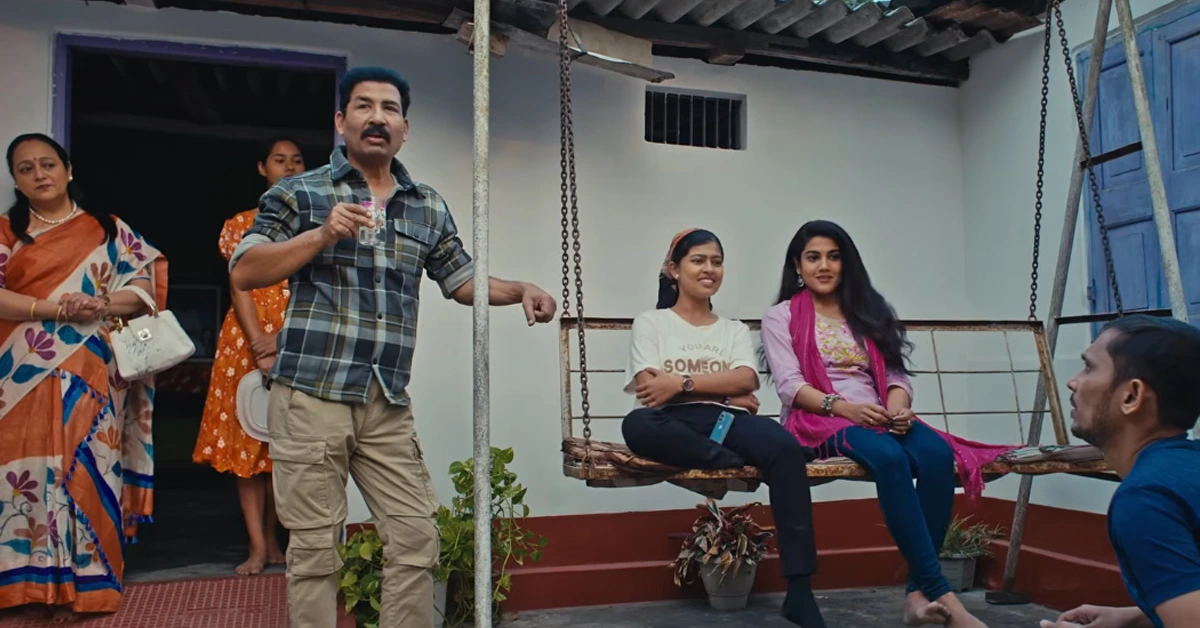
The film opens with a retired army man and his family arriving at his sister's ancestral home in Tezpur with a mission in mind. The opening sequences capture the beauty of Tezpur almost flawlessly. It almost feels as if the director wants to say that the 'City of Love' is not just a location but a character in the film—an integral part of the story.
So what exactly is Bhakut Kut about?
The story centres on an ageing mother who desperately wants to see her son Indukalpa, or Indu, married. The problem, however, is that Indu, despite being an adult, behaves more like a child.
One may loosely describe him as a man-child—an adult with a deeply innocent and childlike personality who remains untouched by the harsh realities of society. Indu is simple, trusting and unfazed by the cruelty of the world. For him, the world is a beautiful place, and he believes everyone around him is as honest and straightforward as he is.
Physically, he is perfectly fine, but his slightly underdeveloped intellect becomes a major obstacle when it comes to marriage. Determined to overcome this hurdle, his mother comes up with a plan with the help of her retired army brother.
From there, the film moves through a series of attempts by different characters to find a suitable bride for Indu. Of course, none of them is doing it out of pure goodwill. Each of the 'helping souls' has their own eye on the reward involved.
Alongside this central plot runs a parallel love story between Monuj Borkotoky and Darathie Bharadwaj, stitched into the narrative to keep the story moving.
But does the film succeed?
Bhakut Kut is essentially a feel-good film that moves like a sinusoidal curve, rising and falling with its moments of brilliance as well as its dull patches. At times, the film feels lively, warm and engaging, drawing the audience into its simple world and characters. But just when it begins to gather momentum, it also slips into phases where the narrative slows down and loses some of its sharpness.
One of the film's strongest points is its honesty. Almost every actor seems to have poured their heart into their performance. The cast had a good time while shooting the film, and that enjoyment reflects in their performances and the chemistry they share on screen.
However, the film's uneven pace and a rather weak script work against it. A story like Bhakut Kut deserved a stronger and tighter screenplay.
To the makers' credit, they have avoided turning characters with mental health challenges into caricatures for comedy. The subject has been handled with sensitivity. Yet the narrative still feels somewhat half-baked and could have benefited from more refinement.
Several characters are introduced, but not all of them are properly developed. There was ample scope to explore the arcs of many characters. Some roles—especially that of Pranjal Saikia—could easily have been removed without affecting the story.
Kaushik Nath stands out as Indu. He delivers a brilliant performance and portrays the character with remarkable ease. His mannerisms and subtle nuances feel natural and believable.
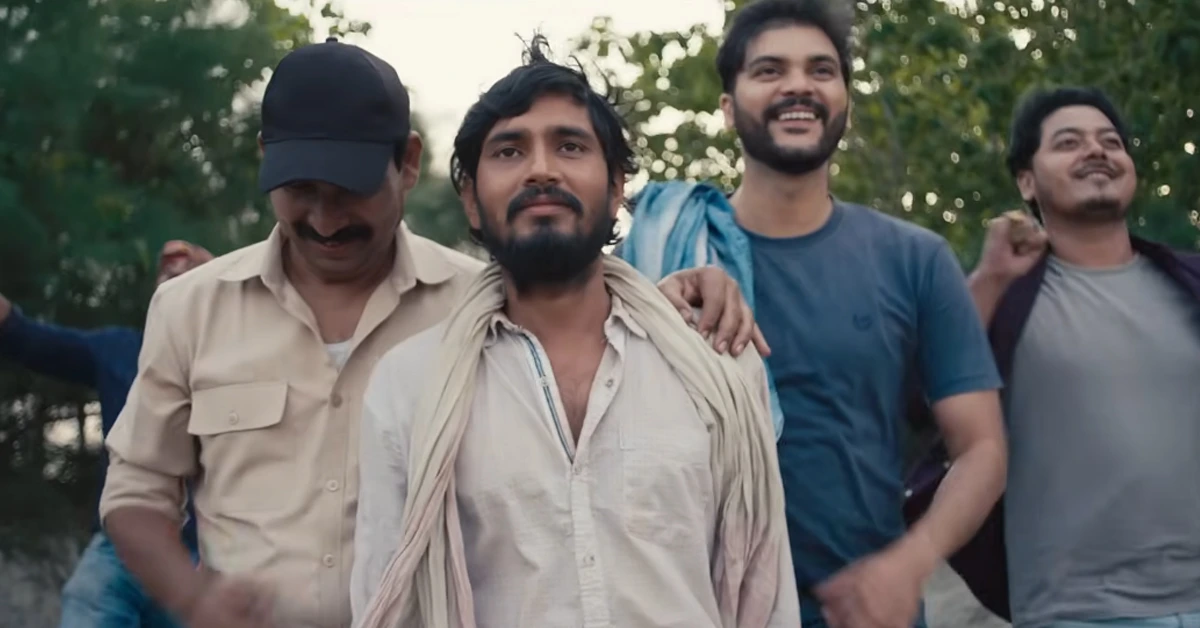
Mridul Sutia, playing the retired army man, is equally impressive. It is refreshing to see him deliver such a natural performance without slipping into a theatrical style.
The on-screen chemistry between Monuj Borkotoky and Darathie Bharadwaj is sweet, and as a viewer, I would certainly like to see this pair more often in the future.
Pratibha Choudhury, who plays Indu’s mother and Mridul Sutia’s elder sister, does a commendable job, although I felt she was somewhat underused. Her brother-sister chemistry with Mridul Sutia feels genuine, but her relationship with Indu could have been explored more deeply.
One actor who suffers from weak writing is Himanshu Prasad Das, who plays Piku—a character with several shades of grey. Unfortunately, the role is underdeveloped and could have been written far better. That said, one encouraging aspect of his performance is that he seems to be playing the character rather than repeating himself. His mannerisms are subtle and underplayed, and the usual mother-tongue influence often noticed in his dialogue delivery is largely absent. This marks a clear refinement in his performance.
Other actors, including Parag Baruah, Mintu Baruah, Bina Patangia, Jayahsree Phukan Bhuyan, Dip Kalita, Dipjyoti Kakoti, Moonmi Phukan, Mrinal Riku Sarma, Kabyashree Hazarika, and Priyanka Borthakur, among others, also deliver decent performances.
One opportunity the makers seem to have missed is the chance to elevate Bhakut Kut to something more memorable.
If the film had focused more on Indu's love story instead of giving greater attention to the track of Dhiraj and Radhika, the narrative could have taken a very different direction altogether. What we have now is a pleasant and familiar feel-good story. But with a slight shift in focus, the film might have given Assamese cinema something far more unusual and refreshing.
I mean, how many times have we seen a man-child falling in love with someone exactly like him from the opposite gender? How often do we come across a story that tries to stitch together a love story between two child-like adults, built purely on innocence and emotional purity, in Assamese cinema? The very idea carries the possibility of something rare and deeply moving.
If, instead of choosing the safer and more predictable route, the makers had dared to explore this largely untouched territory, the entire film could have turned on its head. In fact, we might very well have had a cult classic on our hands.
Technically, the film is an improvement over Chinmoy Sharma's earlier film Bhoot Jolokia. For most of the runtime, the colour grading, set design, background score, and art direction remain strong.
The songs are pleasant and easy on the ears, with the peppy number Nasi Diya lingering in the mind long after it is heard. It has the kind of rhythm that keeps playing on repeat in one’s head.
The use of Zubeen Garg’s songs in the background has also been handled with restraint and subtlety, blending naturally with the narrative rather than overpowering it.
Personally, I believe every film should have a strong opening and an even stronger ending. Bhakut Kut begins well enough, but the climax feels fragile and rushed.
The film moves at a steady pace for most of its duration, only to arrive at its conclusion rather abruptly. It almost feels as if the makers were unsure about how to bring the story to a proper and satisfying close.
The climax, unfortunately, turns out to be anything but engaging, and even the performances suddenly begin to look plastic and slightly disoriented. The emotional rhythm that the film manages to maintain for most of its runtime seems to collapse in these final moments.
For a film in which the actors remain convincing and natural for almost the entire duration, this sudden dip in energy and coherence comes as a surprise.
What should ideally have been the most memorable and emotionally fulfilling part of the narrative instead feels hurried and somewhat disconnected. In the end, the climax arrives like a bitter dish served at the end of an otherwise pleasant meal.
With more script sessions and brainstorming, the climax could certainly have been stronger and more refined, which in turn might have lifted the entire film.
At a time when films driven by agendas and propaganda dominate the box office, Bhakut Kut comes across as a breath of fresh air. Despite a few dull moments, the film remains engaging and manages to hold the viewers' attention.
What the film clearly lacked was strong and widespread promotion. With better publicity, it could have connected more effectively with audiences. If word-of-mouth still works—and if positivity travels as fast as negativity—I would still encourage people to watch this film despite its shortcomings.
I would give Bhakut Kut 2.5 stars out of 5—a film where emotions quietly play hide-and-seek with our masked intentions.
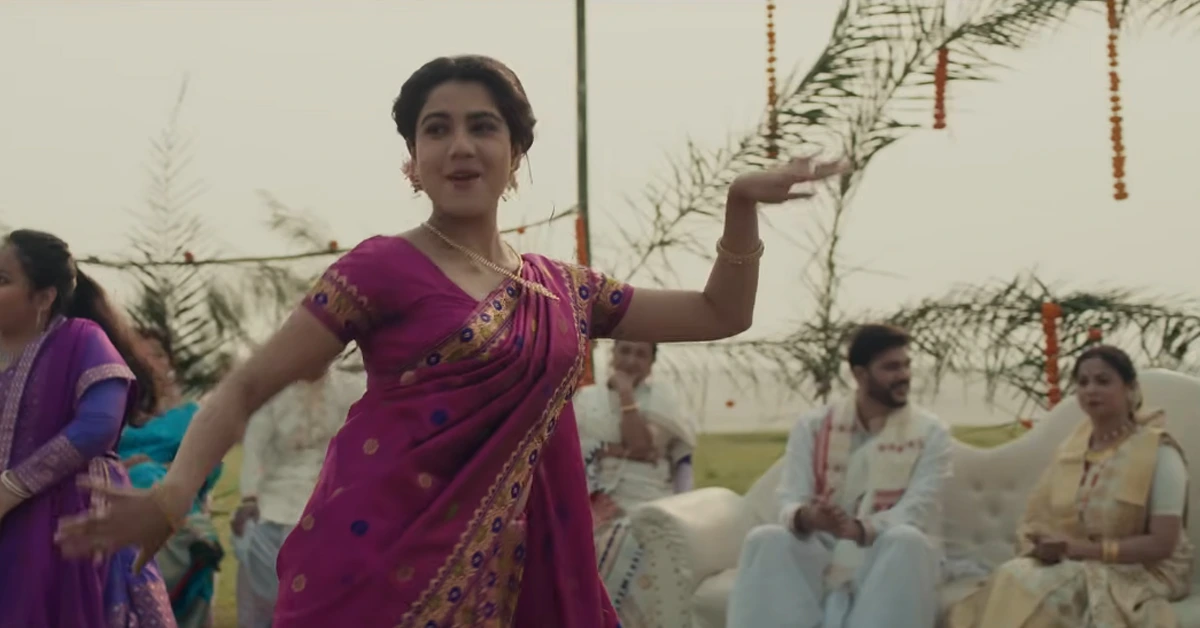
A moment from the peppy number 'Nasi Diya'
ALSO READ | Why Jatin Bora’s New Film 'Agnibaan' Is A Massive Failure?

Partha Prawal (Goswami) is a Guwahati-based journalist who loves to write about entertainment, sports, and social and civic issues among others. He is also the author of the book 'Autobiography Of A Paedophile'.