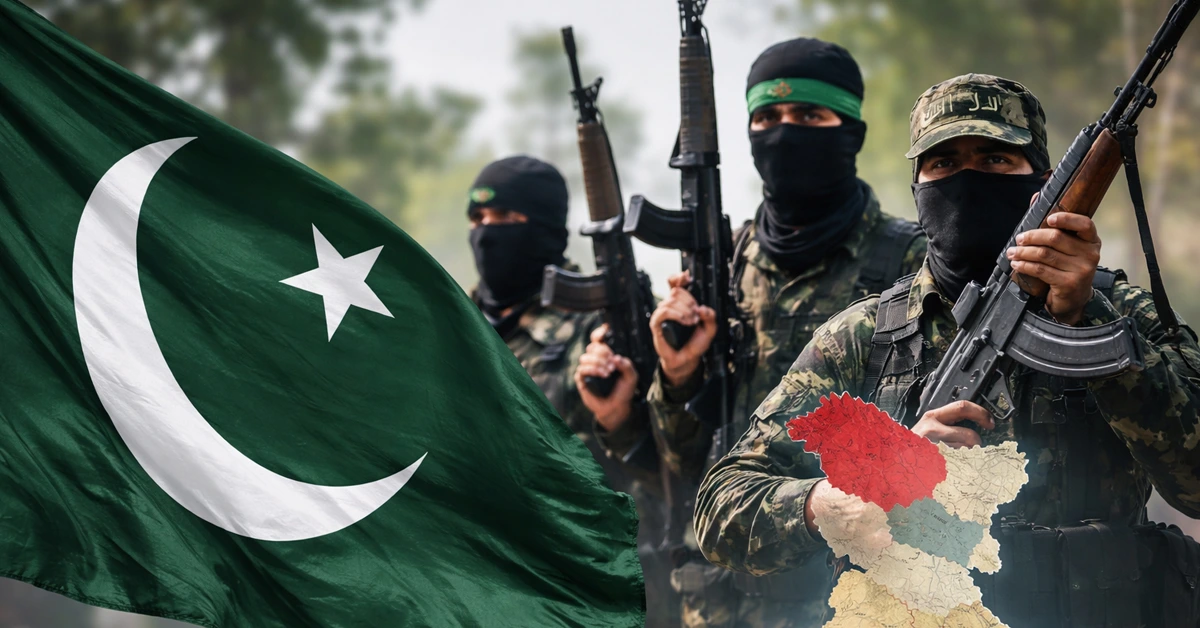
A recent report by the US Congress has warned that several Pakistan-based terror groups continue to pose a threat to India and have ambitions linked to Jammu and Kashmir.
The report, titled Terrorist and Other Militant Groups in Pakistan, was released on March 25, 2026, and highlights the persistence of terrorism despite sustained countermeasures. It notes that multiple military offensives, including airstrikes and extensive intelligence-based operations, have failed to eliminate the numerous militant organisations active on Pakistani soil, reports The Tribune.
According to the report, these groups can be broadly classified into five categories: those focused on India and Kashmir, globally oriented organisations, Afghanistan-focused groups, domestic outfits, and sectarian groups targeting Shia communities.
Among those targeting India, the report identifies Hizbul Mujahideen (HM) as one of the largest and oldest militant organisations operating in Pakistan-occupied Kashmir.
The reports states that HM has a cadre of up to 1,500 members, largely comprising ethnic Kashmiris seeking either independence for Kashmir or its annexation by Pakistan.
The report also points to the continued presence of other major groups such as Lashkar-e-Taiba and Jaish-e-Mohammed, both of which have been linked to past attacks in India and are said to remain active from bases within Pakistan.
It further notes that several organisations designated as terrorist entities by the United States and the United Nations continue to operate from Pakistani territory, maintaining infrastructure in regions such as Punjab province and Pakistan-occupied Kashmir.
Overall, the findings underline ongoing international concern that militant networks based in Pakistan remain active and continue to threaten regional stability, particularly in relation to India and the Kashmir region.
ALSO READ | Indian Rally Legend Hari Singh Missing After Maldives Boat Mishap; Search Suspended

The Story Mug is a Guwahati-based Blogzine. Here, we believe in doing stories beyond the normal.