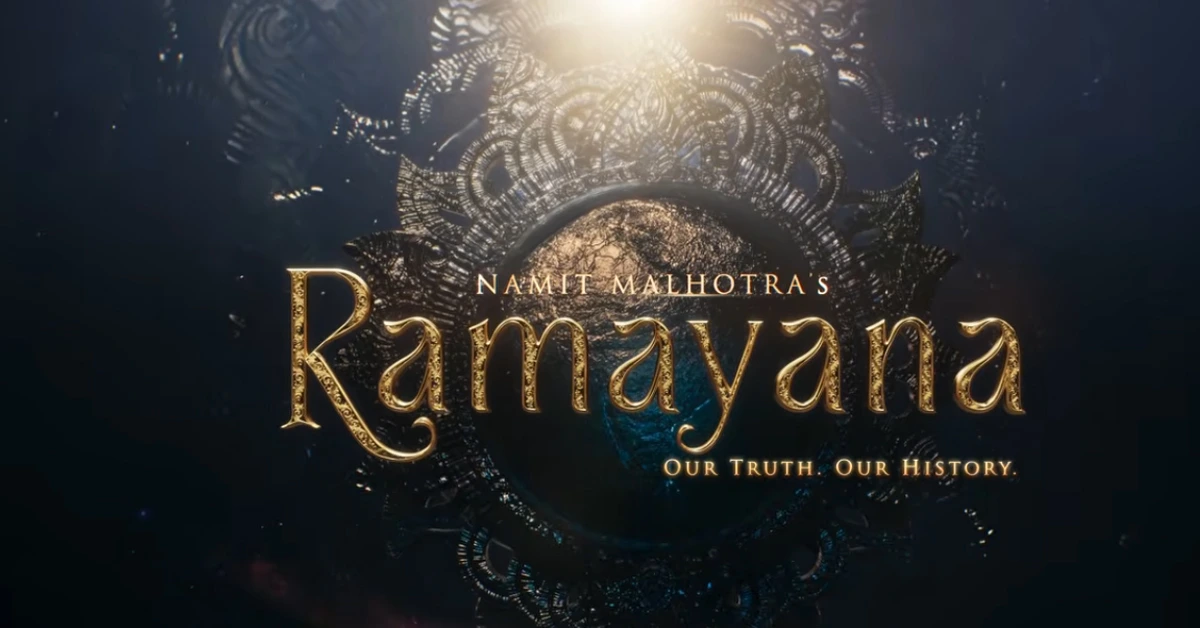
Some cinematic moments are intended to transcend the medium. The release of the 'Rama' teaser for Ramayana on Hanuman Jayanti on April 2, 2026, Thursday, was intended to be such an occasion, blending cultural heritage with a contemporary scale.
Instead, the teaser feels disappointingly familiar. Rather than evoking reverence or excitement, it repeats visuals and atmosphere already seen, undercutting its aspiration to stand apart.
For a film mounted on a reported Rs 4,000 crore budget, with an Oscar-winning VFX powerhouse like DNEG and music legends such as Hans Zimmer and AR Rahman on board, the expectation wasn't just scale- it was transcendence.
But the teaser, at least in its current form, feels curiously distant. And if there's one phrase that seems to echo across reactions online, it’s this: it’s giving Adipurush 2.0.
The film undeniably looks massive. Every frame carries the weight of money spent, of ambition stretched to its limits. However, spectacle, on its own, doesn’t guarantee immersion.
What is missing is texture, the subtle quality that audiences instinctively sense even if they do not consciously notice it.
Ramayana's world in the teaser looks constructed, with overly rendered landscapes like colosseum palaces of Ayodhya, forests, and skies, creating a polish that feels more like a cinematic game than an authentic myth.
This distance is not just visual but emotional. Epics like the Ramayana require viewers not only to observe but also to feel and deeply believe in the world presented.
Often, it is not the grand visuals but minor inconsistencies that disrupt immersion.
For example, Ranbir Kapoor as Rama walks through a storm, yet his hair and clothes remain unaffected by wind or rain. This subtle detail is enough to feel out of place.
In the scene where people are shown throwing flowers and petals on Rama as he walks past them, this clearly suggests that it is CGI- or AI-generated and rendered. The faces of the people in the crowd look completely plastic.
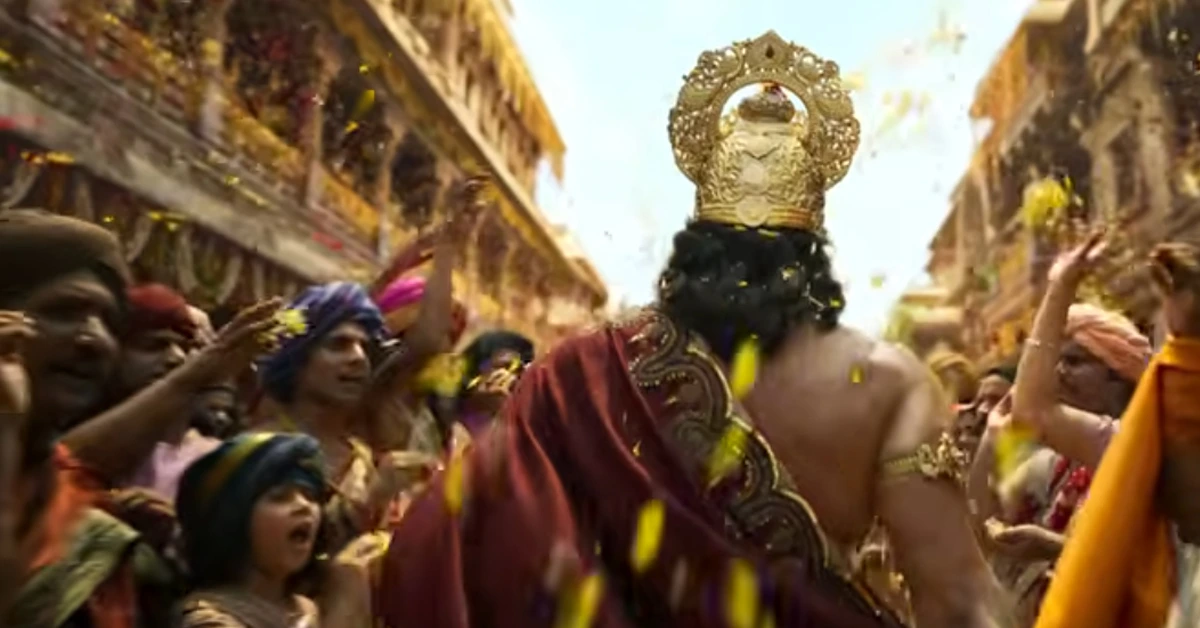
Rama walking through the crowd
This scene reminds us of a similar scene from Baahubali: The Beginning, where Amarendra Baahubali was also shown walking through a massive crowd. Real people were used in the crowd; hence, the emotions felt authentic and connected with the audience. But in Ramayana, that connection is missing.
While mythologies are grand and larger than life, they are not devoid of emotion and connection. Mythologies also rely on internal logic- a big miss in whatever we have witnessed in Ramayana so far.
Indians seem to seek validation from the West, and in this quest, we often end up creating things that move towards a 'global appeal', and Ramayana seems to have followed this trend.
Rather than focusing on the existing scriptures and literature of the epic, its focus seems to have shifted towards validation-seeking, especially in the design of certain characters, the most glaring being the depiction of the asuras.
The Indian asuras are built differently, but what does the Ramayana teaser introduce us to—the Western cousins of these asuras?
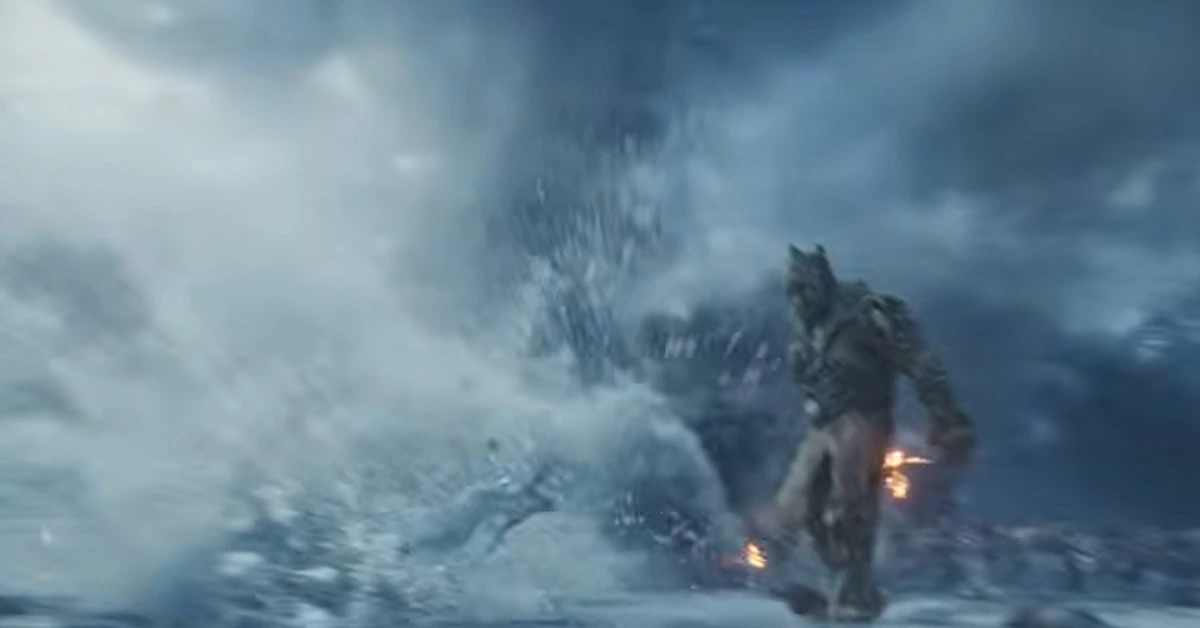
The Asuras in Ramayana looks their Western cousins
And why did this happen?
The answer is simple- this happened mainly because of the desire for greater global appeal, and hence the designs of asuras steered towards a Western fantasy aesthetic rather than sticking to Indian mythological roots.
This universalising move threatens to erode the story's distinct literary and cultural identity, diluting what sets Ramayana apart.
The Ramayan does not require adaptation to feel epic; it inherently possesses that quality.
Then there is a scene where Rama grabs a flying parashu (battle axe). It immediately feels similar to Thor handling Mjölnir or Stormbreaker- the way the weapon flies to him, the catch, and the mid-air movement.
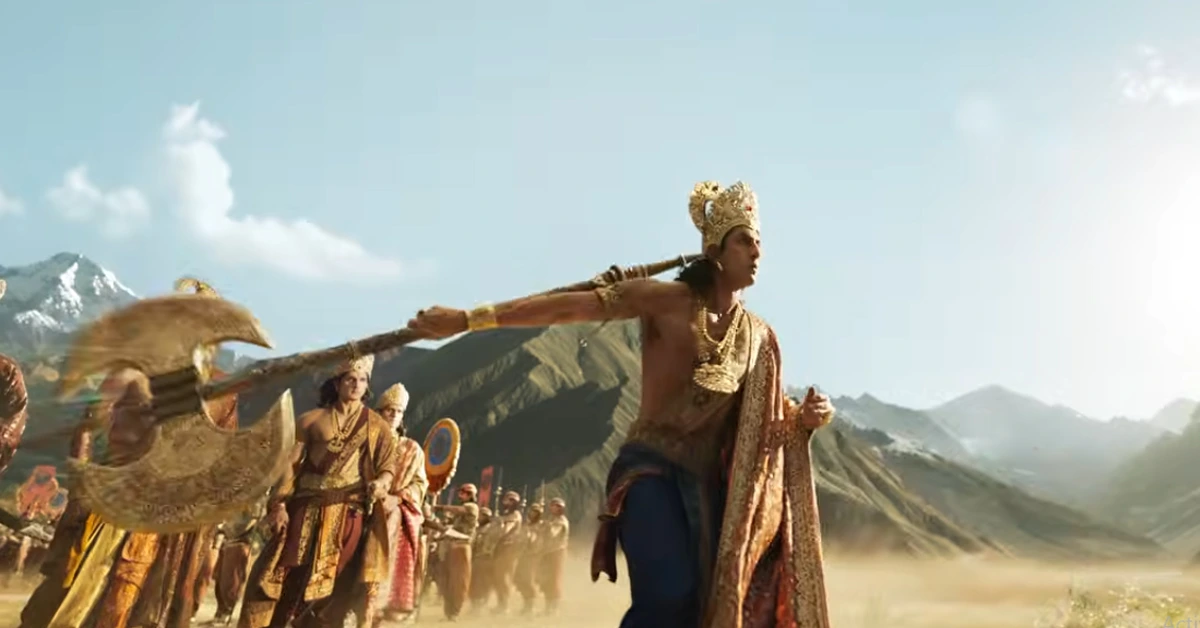
Rama catching 'parashu'
With a Rs 4,000 crore budget, this sequence could have been done differently. Or has action VFX been so shaped by the MCU that everything now follows the same template?
Even in Adipurush, the final battle- Raghav assembling his forces against Lankesh- was lifted frame-by-frame from the Avengers playbook.
When that scene played in theatres, the audience even shouted "Avengers, assemble," which led to laughter across the hall.
Going by this teaser, there is a real chance that Ramayana may end up drawing a similar reaction.
This teaser cannot be viewed in isolation, and the mostly critical responses it has received come with a memory no one wants to remember.
After what happened with Adipurush, audiences have become far more cautious about how mythological stories are being visualised.
There is a clear shift now- people are no longer impressed by scale alone. They are looking for sincerity, for something that feels rooted rather than artificially constructed.
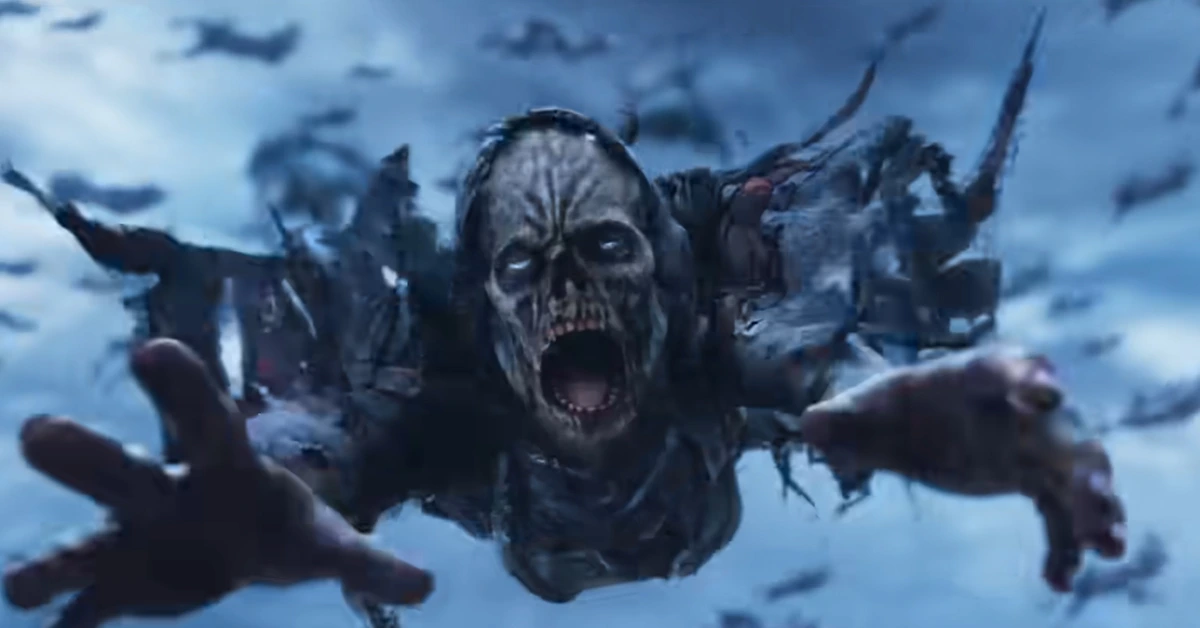
A scene from Adipurush
That earlier disappointment has also affected trust. Viewers are paying closer attention, questioning more, and not letting things pass as easily as they once did.
As a result, anything that looks overly digital or stylised is immediately under scrutiny. What might have earlier been accepted as creative liberty is now being carefully examined.
The Ramayana teaser is thus met with scepticism, facing demands for genuine storytelling over visual excess.
There is still time before release to refine visual effects, adjust lighting, and enhance textures. Editors, too, can still make meaningful improvements.
But these issues seem rooted in the film's foundational approach, not just post-production.
If the core creative choices prioritise visual spectacle over emotional authenticity, surface-level refinements won't change how the film connects with its audience- or how it is remembered.
So, can this be fixed? Not really- not at this stage. But you never know, editors can still do wonders, just a wishful thought.
This contrast is particularly surprising given the background of Nitesh Tiwari as a filmmaker.
Nitesh Tiwari gave us Dangal- a film that worked because it was grounded, textured, and emotionally honest.
This contrast may explain why the current approach feels unsettling.
Ramayana's power lies not in spectacle or scale, but in sincerity and depth. That is what the teaser has yet to offer.
At this stage, the negative and critical response to the teaser is not outright rejection. It is hesitation.
There is hope that the teaser is not reflective of the film, and that it turns out to be the opposite of what this teaser suggests.
But if the film leans into this hyper-digital aesthetic, it risks defeating its own purpose and will ultimately leave the audience dissatisfied.
A film touted as the costliest in Indian cinema could then be remembered as its most expensive experiment—one that failed in the most epic way.
ALSO READ | Why Jatin Bora’s New Film 'Agnibaan' Is A Massive Failure?

The Story Mug is a Guwahati-based Blogzine. Here, we believe in doing stories beyond the normal.