If meaningful cinema is disappearing, the responsibility does not lie only with studios or filmmakers. It lies with us as well- in what we choose to watch, support, and talk about. Meaningful art survives when audiences demand it
I did not fall in love with films because of spectacle. I fell in love with films because they understood people better than people often understand themselves. Cinema once sat quietly beside you, asked uncomfortable questions, and stayed long after the credits ended. Now I leave theatres remembering explosions but forgetting faces. That is why I feel, with growing unease, that meaningful cinema is disappearing.
This is not nostalgia for a “golden age.” It is something simpler and sadder: films no longer trust silence, ambiguity, or emotional risk.
The most obvious reason meaningful cinema is disappearing is that modern films are terrified of stillness. Everything must be loud, fast, and constantly stimulating. Scenes rarely breathe. Conversations are cut into fragments. Even the camera seems impatient.
Film scholars note that modern editing has shifted toward shorter shots, tighter framing, and constant movement, reducing the contemplative visual space that older films allowed.
When nothing lingers, nothing settles. When nothing settles, nothing matters.
I am not against technology. I am against technology replacing thought. Many contemporary films feel reverse-engineered: visual effects first, meaning later. Sometimes meaning never arrives at all.
Veteran filmmaker Ridley Scott has argued that modern movies often rely on digital spectacle because they lack strong scripts, describing a broader creative decline in storytelling.
That diagnosis feels painfully accurate. When the script is weak, no amount of polish can give it a soul. You can amplify noise, but you cannot manufacture depth.
Another reason meaningful cinema is disappearing is fear — not artistic fear, but financial fear. Large studios are no longer cultural institutions; they are risk-management machines. Original stories are uncertain. Familiar franchises are predictable.
This is why we see endless sequels, remakes, and cinematic universes. Not because artists have run out of ideas, but because accountants prefer recognisable brands.
The result is repetition. The same arcs. The same conflicts. The same emotional beats arranged in slightly different packaging.
Critics have observed that modern films often recycle themes and structures, producing shallow engagement rather than genuine resonance.
If every story feels pre-tested, nothing feels discovered.
Older films trusted ordinary people to carry extraordinary emotional weight. Imperfect faces. Awkward pauses. Quiet contradictions. Many contemporary productions, by contrast, chase polished perfection- physically, visually, narratively.
Some viewers argue that modern casting and production aesthetics create a sense of artificiality, making films feel less grounded in real experience.
When characters stop resembling people we know, empathy weakens. Without empathy, meaning collapses.
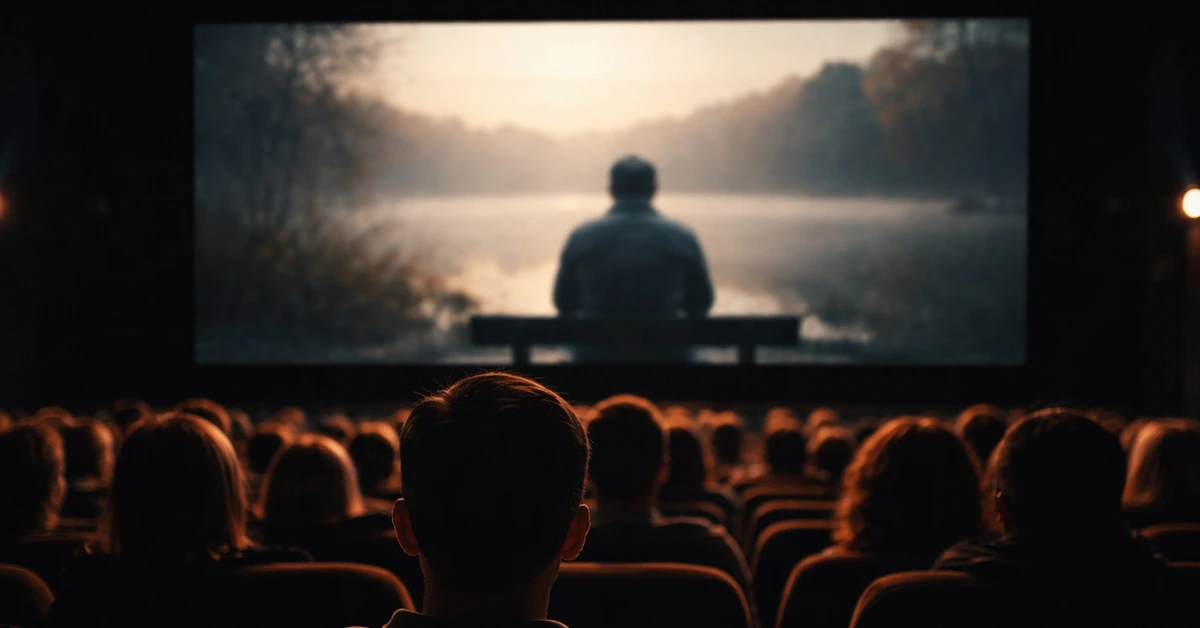
Cinema once demanded effort. You travelled to a theatre, sat in darkness with strangers, and surrendered two hours of your life. That ritual created attention.
Today stories are everywhere — streaming, scrolling, autoplaying, competing with notifications. The problem is not that films exist; it is that they exist alongside everything else.
Analysts note that audiences no longer leave home merely for access to content, because content is now instant and endless.
When stories become disposable, depth becomes inconvenient.
Many great films once drew strength from literature- novels, plays, philosophical texts. That pipeline has weakened. Contemporary cinema increasingly feeds on previous films rather than on broader intellectual traditions.
Some critics argue that modern filmmaking has begun recycling its own past, repeating a handful of plot patterns instead of engaging with complex literary material.
When cinema stops conversing with literature, history, and philosophy, it begins talking only to itself.
I do not believe all meaningful cinema has vanished. It survives in independent films, world cinema, and occasional mainstream anomalies. But it no longer dominates the cultural conversation.
There was a time when deeply human films could also be widely popular. Directors like Satyajit Ray created works celebrated for their humanism and emotional depth, proving that quiet storytelling could reach global audiences.
Today such films often live at the margins.
Even as meaningful cinema is disappearing, I keep searching for it because when it appears, it still works. It still pierces through cynicism. It still makes a room full of strangers breathe together.
Meaningful films do not shout. They observe. They trust the audience to feel rather than instructing them what to feel. They do not fear ambiguity. They do not apologise for being slow. They do not exist merely to distract you from life; they help you understand it.
The real tragedy is not that cinema is changing. Art always changes. The tragedy is that we are losing a space where collective reflection once happened. A dark room where human experience could unfold without interruption.
When films stop asking questions about who we are, they become background noise.
And background noise never changes anyone.
If meaningful cinema is disappearing, the responsibility does not lie only with studios or filmmakers. It lies with us as well- in what we choose to watch, support, and talk about. Meaningful art survives when audiences demand it.
I still believe it can return to the centre. But only if we stop settling for spectacle and start insisting on stories that leave a mark.
Because the day films stop meaning something is the day they stop mattering at all.
ALSO READ | Stop Calling Bollywood 'Indian Cinema': Hindi Films Do Not Speak For The Whole Country

Mahesh 'Karan' Prasad is an engineer by education and an aspiring musician by passion, who also has a knack of writing on music and movies. Having written around a 50 songs, Mahesh has composed and recorded around 10 songs. He wishes to create meaningful and soulful music.